
You Have to Coach the Human
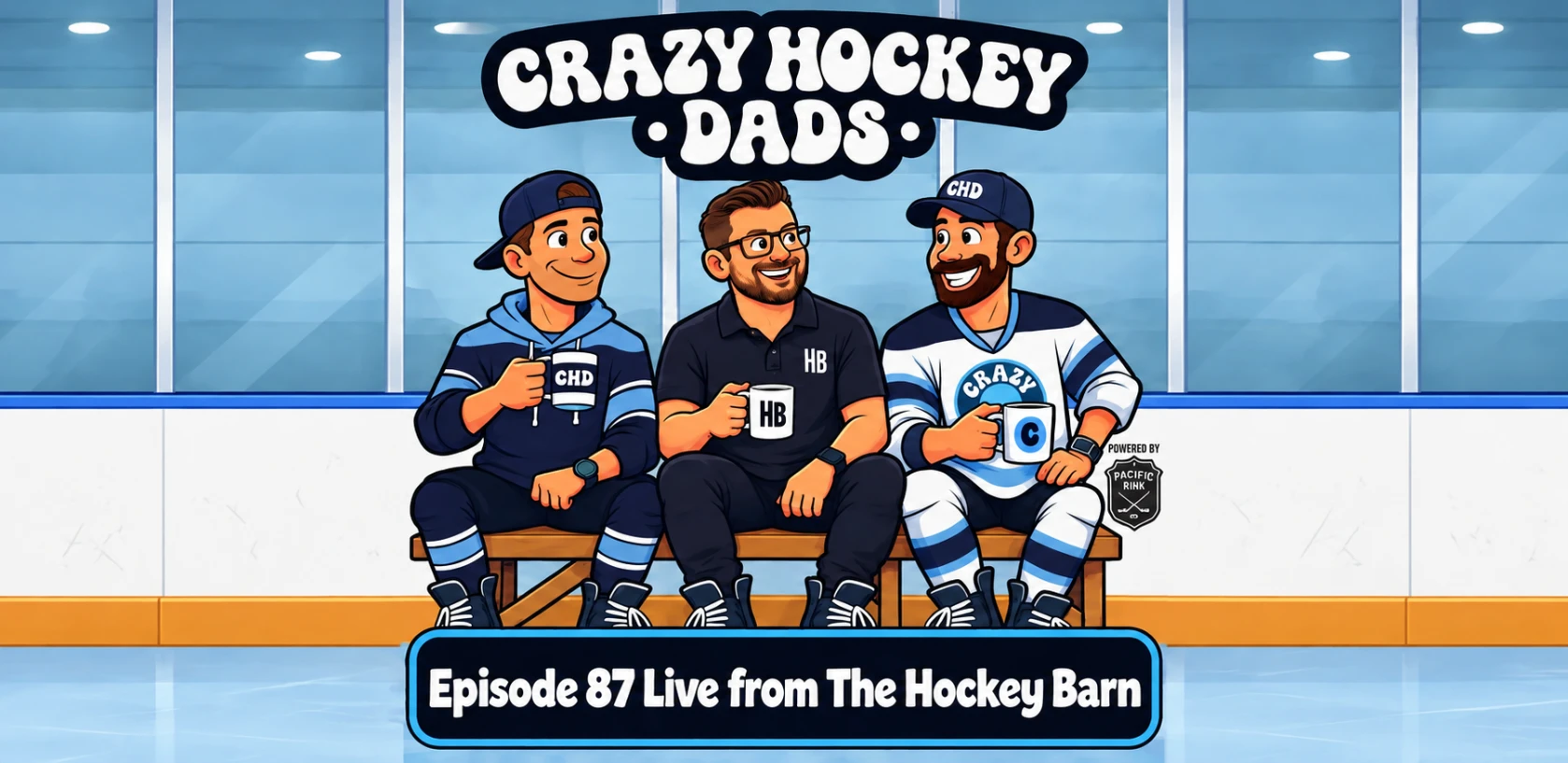
Watch the Full Conversation
Crazy Hockey Dads Podcast, Episode 87: You Have to Coach the Human
An honest conversation about hockey, parenting, player development, and the purpose behind The Hockey Barn.
October 2026 | Hockey Culture & Development | The Hockey Barn
The best hockey development doesn’t always come from the best team, the most expensive private lesson, or the loudest car ride home.
Sometimes it starts with something much simpler: understanding the person behind the player.
During The Hockey Barn’s Grand Opening Barn Bash in Milton, Georgia, Scott and Jamie from the Crazy Hockey Dads Podcast joined founder Kyle Kinzie for a live conversation about hockey, parenting, coaching, adversity, and the experiences that ultimately inspired him to create The Hockey Barn.
For Kinzie, whose playing career ended unexpectedly at 19, hockey has been a lifelong journey of discovering what the game can give us, both on and off the ice.
What followed was an honest discussion about the pressures facing today’s hockey families, the importance of protecting a player’s love for the game, and why developing great hockey players begins with developing great people.
Here are some of the most meaningful moments from that conversation.
How did your own hockey journey shape the coach you are today?
Kyle Kinzie: I started playing hockey in Ohio, and I wasn’t particularly good when I began. In fact, I was probably the worst player on my first team.
But I loved hockey, and I wanted to get better.
I grew up in an environment where I had tremendous access to the game. We practiced four times a week, sometimes more. I had two nets in my unfinished basement, and I spent countless hours shooting pucks, practicing, and finding every opportunity I could to improve.
Eventually, I progressed through competitive youth hockey, playing at the Tier II and Tier I levels.
But when I was 19, everything changed.
I suffered a pulmonary embolism that landed me in intensive care for two weeks. I learned that I had a genetic blood disorder, and the doctors told me my playing career was over.
That was incredibly difficult to accept.
Hockey had been such a significant part of my identity, and suddenly the future I had imagined wasn’t possible anymore.
I started coaching that same year, in 1999.
At first, I was trying to find a way to stay connected to the game I loved. But over time, I realized that my purpose in hockey hadn’t ended. It had changed.
Instead of focusing on what I could accomplish as a player, I began discovering what I could contribute through coaching, mentoring, and helping others experience the game.
Looking back, that adversity ultimately created a path I never could have imagined.
What did growing up with hockey teach you about being a parent?
Kyle: I grew up with a father who was very passionate about hockey and expected a lot from me. He was a perfectionist, and perfection was often the expectation.
Our car rides home were very different from the conversations I try to have with my own children today.
There were a lot of questions about what I could have done better, what I missed, and why certain things didn’t happen.
As a parent, I understand that instinct. We see potential in our kids. We know what they’re capable of, and we want to help them reach it.
But I’ve learned that what we’re trying to communicate isn’t always what our children are hearing.
I’ve had to become much more intentional about the conversations I have with my own kids.
Instead of immediately analyzing their performance, I want to know if they had fun. I want to know what they thought they did well and what they want to work on.
That’s a very different conversation than handing them a list of mistakes.
And believe me, as someone who has coached for nearly three decades, it’s not always easy to sit there quietly when you know exactly what they could have done differently!
But I’ve learned that my responsibility as a parent is different from my responsibility as a coach.
I want my children to love hockey. I want them to want to go to the rink. I want them to find their own motivation and discover what the sport means to them.
Sometimes that means knowing when to challenge them.
And sometimes it means knowing when to say nothing at all.
You often talk about the Three Loves of Hockey. What does that mean?
Kyle: I believe there are three things that fundamentally shape a player’s hockey experience.
Love the Game. Love the Environment. Love Who You Become Through the Game.
The first is obvious. You have to love playing hockey.
That passion is what makes a player want to practice, compete, improve, and keep coming back, even when things get difficult.
The second is something I think we underestimate: loving the environment.
Who are your coaches? Who are your teammates? How do you feel when you walk into the rink? Are you excited to be there? Do you feel supported? Do you feel like you belong?
Those things matter enormously.
The third is perhaps the most important: loving who you become through the game.
Hockey teaches accountability, discipline, resilience, leadership, teamwork, and how to navigate adversity. It creates relationships and experiences that can influence the rest of your life.
When I think about player development, I don’t simply think about creating a better skater or a better shooter.
I think about all three of those loves.
Because when players love the game, love their environment, and recognize what hockey is giving them beyond the scoreboard, you’ve created something that can last a lifetime.
Why do you believe free play is so important to development?
Kyle: Some of the most valuable development experiences I had growing up weren’t during organized practices.
They happened when I was just playing hockey with my friends.
I was a rink rat. If there was an opportunity to skate, I wanted to be there. Early mornings, late nights, whatever access I could find.
And when we were playing without coaches directing every movement, we were experimenting. We were trying things, making mistakes, figuring things out, and creating our own solutions.
That’s where creativity develops.
Today, so much of youth hockey is structured. We have practices, clinics, private lessons, tournaments, and development programs.
All of those things can have tremendous value.
But we’ve also created an environment where players sometimes have very little opportunity to just play.
Hockey is a game of creativity and decision-making.
You can teach someone a system, a forecheck, or the mechanics of a particular skill. But players also have to learn how to think, react, improvise, and solve problems on their own.
That’s a big part of why free play is fundamental to The Hockey Barn.
We want to combine structured development with opportunities for players to explore the game, compete with friends, and rediscover the fun of just playing hockey.
Sometimes the best thing a coach can do is step aside and let the players play.
What does it mean when you say, “You have to coach the human”?
Kyle: When I first started coaching, I coached the way I played.
I had been a team captain. I understood accountability, expectations, hard work, and pushing people to perform.
But I didn’t necessarily understand how to coach people.
I understood the game. I understood what players needed to do. But I hadn’t fully learned how to connect with each individual.
Over time, I realized that every player learns differently, responds differently, and is motivated by different things.
Some players respond well to direct feedback. Others need encouragement and confidence before they can respond to the same challenge.
You have to understand the person before you can effectively develop the player.
That’s where relationships become so important.
I want to understand what motivates a player. What challenges them? What gives them confidence? What are they dealing with outside of hockey? What are their goals, and are those goals actually theirs?
Because the same coaching approach doesn’t work for everyone.
I tell many of the older players I coach that I care more about who they become as human beings than how good they become at hockey.
That doesn’t mean we lower expectations.
We still challenge players. We still hold them accountable. We still push them to improve and reach their potential.
But we do it through relationships, trust, and an understanding of the individual.
We don’t just coach hockey players. We coach humans who happen to play hockey.
A Moment That Reinforced Everything
One of the most meaningful moments during the podcast came from a parent in the audience.
The parent shared a personal experience about their child’s hockey journey, including a period when the player was struggling, losing confidence, and beginning to question whether they wanted to continue playing.
The parent spoke about how a coaching relationship helped change that experience, restoring confidence, enjoyment, and a love for the game.
For me, hearing that was incredibly meaningful.
As coaches, we often measure success through wins, championships, player advancement, and individual performance.
Those things have their place. But they don’t tell the whole story.
Sometimes the greatest impact a coach can have isn’t helping a player score more goals or make a higher-level team.
Sometimes it’s helping a young person believe in themselves again.
Sometimes it’s helping them rediscover why they fell in love with hockey in the first place.
And sometimes the most important thing we develop has nothing to do with hockey at all.
That moment reinforced everything I’ve come to believe about coaching.
When you invest in the human, you create the opportunity to influence someone far beyond the rink.
That’s a responsibility I never take lightly.
How should parents and coaches help players navigate adversity?
Kyle: Adversity is unavoidable in hockey.
Players get cut from teams. They lose games. They struggle with confidence. They go through periods when their development doesn’t seem to be progressing.
And as parents, it’s hard to watch.
We want to fix things. We want to make the disappointment go away. We want to create opportunities for our kids to succeed.
But adversity can also be one of the greatest teachers the game provides.
The challenge is helping players navigate those experiences without losing their passion for hockey.
I shared a story during the podcast about a 16U team I coached that traveled to Nashville.
We ended up playing a team that was significantly stronger than ours, and the final score was incredibly lopsided.
Our players were devastated.
Later that evening, we got back to the hotel, which happened to share a parking lot with a Wendy’s.
I asked the boys if they’d ever walked through a drive-thru before.
Of course, they looked at me like I was crazy.
So that’s exactly what we did.
The entire team, siblings included, walked through the Wendy’s drive-thru, and I bought everyone Frostys.
I told them they probably wouldn’t remember the score of that hockey game years from now.
But they’d remember that night.
And that’s the point.
The relationships, experiences, and memories we create through hockey matter.
We should absolutely teach players to compete, work hard, and strive to win.
But we also have to teach them that a scoreboard doesn’t define who they are.
What’s the difference between developing capability and developing consistency?
Kyle: We have some incredibly talented hockey players in Georgia.
We have great coaches, great organizations, and families who are deeply committed to the sport.
But one of the challenges in our community is access.
I grew up in an environment where we could practice four times a week, and there were opportunities to be around hockey constantly.
That’s not always the reality here.
And there’s an important distinction between being capable of executing a skill and being capable of executing it consistently.
A player might execute a particular move perfectly during practice.
But can they do it again?
Can they do it under pressure?
Can they execute it shift after shift, game after game?
That’s where consistent development becomes so important.
At The Hockey Barn, we’ve built our Player Development Plan around understanding where a player is today, identifying opportunities for growth, and providing a pathway for continuous improvement.
It’s not about walking into a clinic, learning something new, and then hoping you remember it the next time you get on the ice.
It’s about having access to coaches, resources, and an environment where players can repeatedly practice and apply what they’re learning.
We want to help turn capability into consistency.
And we want to do it in an environment where players enjoy the process.
What ultimately inspired you to create The Hockey Barn?
Kyle: I’ve always dreamed of building something around my passion for hockey.
A few weeks before our grand opening, my son asked me a question on the way to school.
He said, “Dad, what’s your dream job?”
I told him, “Buddy, I’m doing it.”
I don’t think he fully understood what I meant at first.
But that’s exactly how I feel.
I’ve spent nearly three decades coaching, mentoring, and watching the impact hockey can have on people.
And over those years, I’ve also spent a lot of time thinking about what could be better.
We have an amazing hockey community in Atlanta. But we also have challenges around access, development opportunities, and bringing that community together.
For a long time, I found myself identifying things I wished were different.
Eventually, I realized that rather than continuing to talk about what needed to change, I wanted to help create something better.
The Hockey Barn became my vision of what a hockey environment could be.
Not just a training facility.
Not just a place to skate.
But a playground for hockey.
A place where kids and adults can develop their skills, compete, have fun, build relationships, and feel part of something special.
We’re going to work hard here. We’re going to challenge players and help them become better.
But we’re also going to play broomball on skates. We’re going to have glow hockey games. We’re going to bring people together and create experiences that make them want to come back.
Because at the end of the day, hockey should be something people love doing.
And I believe the environment we create has an enormous influence on that.
What do you ultimately hope people experience when they walk through The Hockey Barn’s doors?
Kyle: I want people to feel like they’ve found a place where they belong.
It doesn’t matter which rink you play at, which organization you’re part of, whether you’re a beginner or an experienced player, or whether you’re six years old or sixty.
Hockey should bring people together.
One of the most rewarding things we’ve experienced as we’ve introduced people to The Hockey Barn is watching what happens when they walk through the doors.
They don’t want to leave.
The kids want to keep playing. The adults want to get back on the rink. Parents see an opportunity for their families to connect with others who share that same passion.
And when they leave, the first question is often, “When can we come back?”
To me, that’s a powerful measure of success.
We want to create a home for the hockey community. A place where players have access to meaningful development, where coaches can build relationships, and where families can share experiences that extend beyond the game.
That’s what our philosophy of Train. Compete. Belong. is all about.
Training gives players the opportunity to improve.
Competition allows them to challenge themselves, apply what they’ve learned, and grow through the experience.
Belonging creates the relationships, environment, and community that make them want to keep coming back.
When those three things come together, I believe we can create a better hockey experience.
And ultimately, that’s what The Hockey Barn was built to do.
More Than a Podcast. A Shared Passion for Hockey.
What began with the Crazy Hockey Dads discovering The Hockey Barn during a visit to Atlanta evolved into a weekend of hockey, conversation, and a shared belief that the youth hockey experience can be better.
Scott and Jamie traveled from New Jersey to experience The Hockey Barn firsthand, meet our team, explore our Player Development Plan, and join our hockey community for the Grand Opening Barn Bash.
Their willingness to openly share their own experiences, mistakes, and lessons as hockey parents made the conversation especially meaningful.
We are grateful to Scott and Jamie for making the trip, sharing their perspectives, and helping bring these important conversations to hockey families across the country.
Because at the end of the day, whether we’re parents, coaches, or players, we’re all trying to answer the same question:
What are we playing for?
At The Hockey Barn, we believe the answer starts with loving the game, loving the environment, and loving who we become through the experience.
Train. Compete. Belong.